

AFI founder George Stevens Jr. breaks down the ‘giants’ of movie history
WASHINGTON — Classic movie posters adorn the walls of a most unique Kennedy Center office.
Shiny awardsÌýlineÌýthe shelvesÌýto the tune ofÌý17 Emmys, two Peabodys and an Honorary Oscar.
Buried beneath this trove of hardware sits a remarkable man with Hollywood history pumping through his celluloid veins. George Stevens Jr.,Ìýson of legendary filmmakerÌýGeorge Stevens,Ìýexcitedly sifts through files from the infancy of his own professional baby — the American Film Institute — cracking a smile as he finds a pair ofÌý1968Ìý recruiting then-unknown filmmakers.
Their names: George Lucas and David Lynch.
How did such a fountainÌýof Hollywood history come to exist in this Washington space?
²ÝÝ®´«Ã½ sat down for an exclusive interview with the 83-year-old AFI founder, drilling for film history andÌýstriking aÌýgusher like that whichÌýdrenched James Dean for an iconic image in Stevens family lore.
FoundingÌýthe AFI
“I had come to Washington and realized that there was very little awareness about the value and potential of film,” Stevens Jr. tells ²ÝÝ®´«Ã½ of his move from L.A. to D.C. in the mid-’60s. “Film wasn’t the center of the conversation the way it is now. Nobody knew the names of any directors and it was sort of fashionable to say, ‘I never go to the movies.’ … The European countries had greatÌýfilm schools and we didn’t. We didn’t preserve our films and they were disappearing and deteriorating. So the (American) Film Institute was kind of organic to me when the opportunity presented itself.”
That opportunity cameÌýduring the Kennedy administration, when Edward R. Murrow askedÌýStevens Jr. to join him at the U.S. Information Agency. Shortly after in 1965, President Lyndon B.ÌýJohnson issued a presidential mandate to establish a national arts organization to preserve American cinema.
Stevens Jr. rose to the challenge by founding the AFI with support by the National Endowment for the Arts, Ford Foundation and Motion Picture Association of America. Heading up the board were Gregory Peck as chair andÌýSidney Poitier as vice chair. Who better than Atticus Finch and Mr. Tibbs?
A Father’s Footsteps
Like most things for George Stevens Jr., the creation of the AFI exemplified the dual-edged sword of his existence, showcasing his own daringÌýingenuity, whilst taking a lesson from his old man.
His father hadÌýanswered a similarÌýpresidential call by then-General Dwight D. Eisenhower, whoÌýput the elder StevensÌýin charge of combat photography for the European Theatre during World War II.
BeforeÌýthe war, Stevens made lighter pictures, fromÌýthe Astaire-Rogers musical “Swing Time” (1936) to the action-adventure “Gunga Din” (1939) to the romantic comedyÌý“Woman of the Year” (1942).
After the war, he came back a changed man. Having witnessedÌýD-Day and the liberation of the Dachau concentration camp, his ensuing films became decidedly more serious, marking a soul-searching transformation throughout the ’50s leading up toÌý“The Diary of Ann Frank” (1959).
This renewal period featured his three greatest pictures — “A Place in the Sun” (1951), “Shane” (1953) and “Giant” (1956) — all must-see classics which we’ll explore below with the help of Stevens Jr.
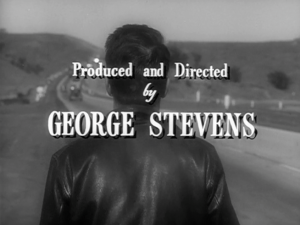
‘A Place in the Sun’ (1951)
Adapted from theÌýnovel “An American Tragedy” by Theodore Dreiser, “A Place in the Sun” followed aÌýdeadly love affair of unwanted pregnancy. Starring Montgomery Clift, Elizabeth Taylor and Shelley Winters, theÌýfilm split the Best Picture vote with “A Streetcar Named Desire,” allowing “An American in Paris” to slide in for the win, but it deservedly earned Stevens his first Oscar for Best Director.
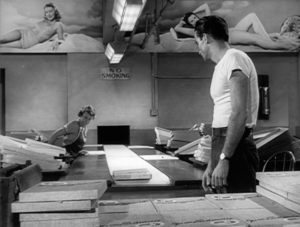
If you’re still not sure what it takes to win Best Director, as opposed to say, Best Screenplay, check out “A Place in the Sun.” The script may call for a love triangle, butÌýStevens brilliantly visualizes it viaÌýmise-en-sceneÌý(symbolic placement of images in the frame). When Clift first sees Winters, a double image of women appears on the wall behind them. Later, while dating Winters but craving Taylor, Clift isÌýdistracted by the flashing neon sign out the window, readingÌýTaylor’s last name “Vickers.”
 ÌýÌý
ÌýÌý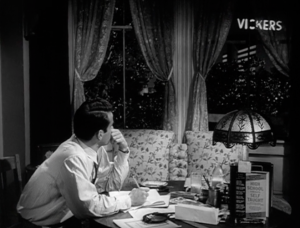
“He was very imaginative at using the screen, the moving image, and he did it usually not to call attention to itself,” Stevens Jr. tells ²ÝÝ®´«Ã½. “The long dissolves in ‘A Place in the Sun,’ he would use the full force of the medium, but he also had an expression that he never wanted the audience to be looking at the picture and be thinking of the cameraman with his hat on backwards, riding the crane.”
“There’s a subtlety that lets the audience do a lot of work,” Stevens Jr. says. “The studio mantra in the old days was the audience has the intelligence of ten-year-olds, and I have often said, what did you learn working with your father as many years as I did, and my answer is respect for the audience. He respected the audience and gave them credit for being able to be partners in the telling of the story.”
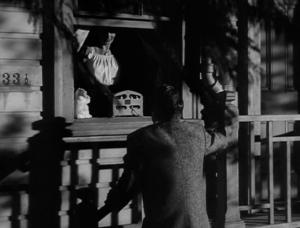
For instance, check out the scene where Clift makes love to Winters. Most filmmakers would show them graphically having sex, force-feeding it to the audience. Stevens, on the other hand, finds a visual way to express the same thing, focusing in on a clock radio on the windowsill as a rainy night turns to a clear morning in time lapse, followed by the jarring sound of aÌýwhistle steaming with desire.
 Ìý
Ìý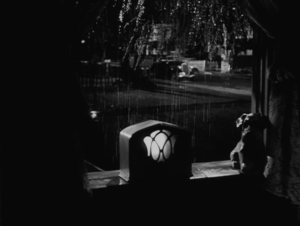 Ìý
Ìý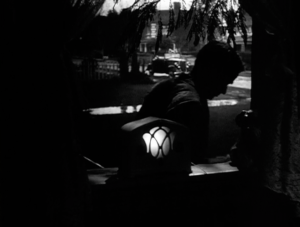
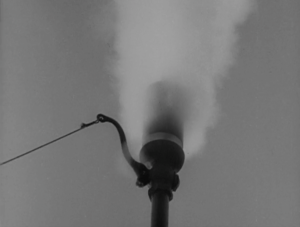
Similarly, check out the scene whereÌýClift and Winters go to the courtroom to get married. As they exit, the camera holds on a vacant courtroom, foreshadowing Clift’s tragic legal fate.
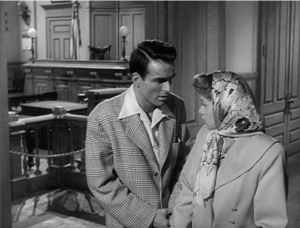 Ìý
Ìý 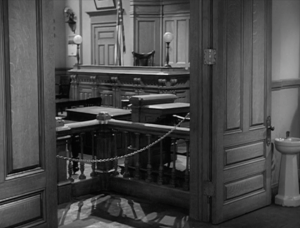
‘Shane’ (1953)
“My first summer in college …ÌýI had two jobs.ÌýOne was to break down Theodore Dreiser’s ‘An American Tragedy.’ÌýThe other was to read books that came from the studio,” Stevens Jr. says. “This small book came and I read it, and I went to see my father one night. He was in bed reading, and I said, ‘I read this story this afternoon, it’s a really good story, you oughta read it.’ And he said, ‘Why don’t you tell me the story?’ So I was pacing around his bed trying to tell him the story of ‘Shane.'”
Stevens Jr. still has a copy of that original book with his father’s notes in the margins, suggesting that “Monty will have to put on muscle” to whack the tree stump in the film’s famous scene.
Instead, the role went to Alan Ladd, playing a weary gunfighter who rides in from the horizon and attempts to settle down with a homestead family, before taking up arms to settle a ranchingÌýconflict.
Fresh off D-Day memories, Stevens used “Shane” to debate theÌýmorality of gunplay, suggestingÌýthat “a gun is a good or as bad as the man using it.” As director, he employs masterful techniques, including a ghostly dissolve of villain Jack Palance, so scary that even the dog slinks away in fear.
All the while, Stevens Jr. served as production assistant, watching his father like young Brandon de Wilde watches Ladd. Today, you can imagine both calling after their ghostly heroes to come back.
‘Giant’ (1956)
After assisting his father on “Shane,” Stevens Jr. joined the Air Force, but still found time to pay frequent visits to the set of his father’s greatest movie, “Giant” (1956). Starring Rock Hudson, Elizabeth Taylor and James Dean (in his final role), theÌýepicÌýfilm was farÌýahead of its time on issues of race, gender and class, a trio of themesÌýÌýin the new PBS documentary “Children of Giant.”
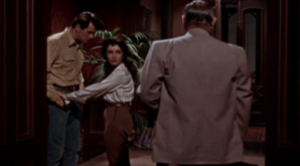
AsÌýthe actual child of “Giant,” Stevens Jr. witnessed his father win aÌýsecondÌýOscar for Best Director in perhaps the most important movie he ever made.ÌýSome of his directorial techniques are more subtle, like the shifting light between Rock Hudson and Elizabeth Taylor to subconsciously influence ourÌýsympathies. In one key scene, Taylor’s shots are well-lit, while Hudson’s shots are in the shadows.
 Ìý Ìý
Ìý Ìý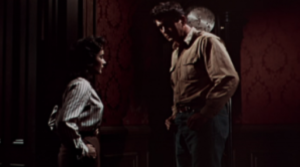
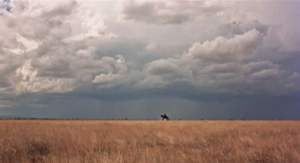
Other times, Stevens is far more overt, cutting from an extreme wideshot of a horse in the distance to an extreme close-up of the spur digging into the horse’s side,Ìýbucking off Mercedes McCambridge.
“He used to say he made his films in the editing room,” Stevens Jr. says. “He’d shoot a lot of film and then he’d look for the best way to tell the story. That’s instinct to do something that’s going to (snap) arrest the audience’s attention and have that foreboding that all is not well in this horse ride.”
 ÌýÌý
ÌýÌý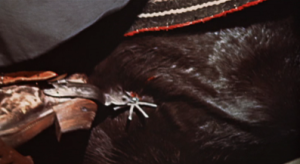
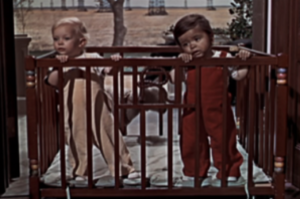
The final shot proves the film’s social power, as Hudson and Taylor stare at their grandchildren — one Anglo, one Latino — with symbolic farm animals behind them. These young dreamers are the product of an on-screen interracial marriage 11 years before “Guess Who’s Coming to Dinner” (1967).
 Ìý Ìý
Ìý Ìý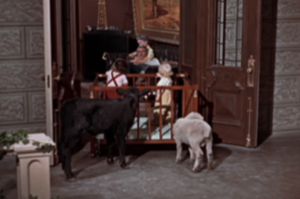
Legendary Peers
Stevens Jr. explores such techniques in his book series “,” featuring Q&As at the American Film Institute. The newestÌýbook, subtitled “The Next Generation,” features interviews with everyone from Darren Aronofsky to Steven Spielberg, while the original book, “Hollywood’s Golden Age,” interviews pioneers fromÌýFrank Capra to Alfred Hitchcock.
“I really judge filmmakers by their body of work,” Stevens Jr. tells ²ÝÝ®´«Ã½. “William Wyler said, when we gave him his Lifetime Achievement Award, ‘I’m not sure whether I believe in the auteur theory, but I’m the only director in Hollywood who can pronounce it correctly.’ So these were men of humor and most of them also liked a good drink. … It was a hard-living bunch in those days.”
As Stevens Jr. describes his father’s filmmaking friends, heÌýrepeatedly paintsÌýAmerican cinema as an artistic melting pot. Indeed, theÌýfounder of the American Film Institute understands that many of America’s greatest directors actually come from somewhere else, a soft spotÌýfor the immigrant experience perhaps stemming from his father’s own humanist awakening in “Giant.”
Frank Capra (Italy)
“He was born in Italy and came to the United States and ended up making the most loved films of the ’30s and early ’40s.ÌýHe was about 5-foot-7 and a feisty guy. Dad told me when Capra came to the Pentagon one time … he came to talk to them about this movie program. They walked in and there were ten generals and admirals and they all had uniforms on, and all at a big conference table, and he shook hands with them. … ‘Well fellas,’ he says. ‘Are we gonna talk about motion pictures?’ They said yes. And heÌýsays, ‘Well, I’ll sit at the head of the table.”
Billy Wilder (Vienna)
“What’s so remarkable about that era …Ìýis that some of the funniest films — ‘Some Like it Hot,’ to name one — (were) made by this fella who was born in Vienna and spoke with an Austrian accent to the day he died.ÌýThe immigrant enriched this unique American form of motion-picture comedy.”
Alfred Hitchcock (England)
“He was so brilliant about being specific about how movies are made. He was contrary and he would talk about that it’s all preparation. He said, ‘When I walk onto the set to start shooting a movie, I’ve made the movie in my head. And I’m really kind of bored to have to shoot it. And (dad)Ìýsaid, ‘Well, why don’t you let somebody else shoot it?’ And he said, ‘Cause I don’t want them to screw it up.'”
William Wyler (France)
“We were good friends and he had gone also into the army like my father and he flew missions in B-25s over Germany making a film called ‘The Memphis Belle.’ He lost his hearing in an attack on the plane he was flying. … Born in Toulouse, France, comes to America and has a great career, gives it up to join the army to go back to Europe and risk his life. These were great men.”
John Ford (U.S.A. via Irish parents)
“He just had this great Irish-American sensibility that applied to westerns or comedies. There was just tremendous heart in his work and he loved American history and had a way of presenting it.”
Legacy
Among suchÌýlegendary filmmaking peers, it’s easy to get lost in the shuffle. What a shame. To these critic’s eyes, George Stevens remains one of the most underrated of the so-called “great” directors. While three of his films made the original AFI Top 100 in 1997 — “Giant,” “A Place in the Sun” and “Shane” — only two remained on the AFI’s 10th anniversary list in 2007 — “Shane” and “Swing Time.”
Why is Stevens sometimes overlooked? Stevens Jr. says it’s becauseÌýhis dad defied labels.
“Hitchcock: the master of suspense. John Ford: he made great westerns.ÌýMy father just played the full spectrum of comedy, drama, adventure,” Stevens Jr. says. “He never wanted to be pigeon-holed, and sometimes it’s easier for the critics if they can pigeon-hole somebody and wrap it up and tie a ribbon around it. He has more dimension than that.”
In fact, Stevens Jr. thinks he’s found a hidden gem among his father’s work that will rise over time.
“One film of his that was not a great success financially, and one of the most ambitious films he ever made, was ‘The Greatest Story Ever Told,’ the life of Jesus,Ìýwhich I think over time is going to become a hugely respected film. … It’s a serious telling of this story that’s fascinated mankind for generations. … He made it so it could be accepted by the believer but also could be respected and engaging to the non-believer. … If you enjoy seeing how scenes are staged and how story is told, this is a sleeper.”
Future
As any loving son would, Stevens Jr. hopes that Max von Sydow’s Christ in “The Greatest Story Ever Told” will one day rival Charlton Heston’s Moses in “Ten Commandments” for annual Easter airings.
It remains to be seen whether this son’s dream will come true for his father.ÌýSeveral past ideas never materialized, like an official film museum on the National Mall and the now-collapsed “American Film” magazine. Still, plenty ofÌýother dreams have enjoyed enduring success, from the American Film Institute to theÌýAFI Life Achievement Awards to theÌýKennedy Center Honors, allÌýof which he created.
As for the film industry as a whole, Stevens Jr.Ìýwishes more funds would go to qualityÌýfilmmakers.
“My father, Fred Zinnemann, David Lean, William Wyler, John Ford, they were making the big pictures every year,” Stevens Jr. says. “Now, the big investment is going to the tent poles, and that’s not where the great filmmakers are working. And so the films that end up getting award consideration are usually films made for much less money. ÌýI thought it was a good thing when the lion’s share of the resources would go to a David Lean to go do a ‘Zhivago’ or ‘Lawrence’ or ‘River Kwai’ or to my father to make ‘Giant’ or ‘A Place in the Sun’ or ‘Shane.'”
What caused this splintering between the popular and the respected, two things that used to go hand-in-hand, but now seem divided between summer blockbuster season and award season?
“Is it ‘Jaws’ gone mad? I guess ‘Star Wars’ was the one that set it off,” heÌýsays, admiring those gemsÌýbut lamenting the sequel-culture they created.Ìý“International corporations have found that the way to make a lot of money is to make these so-called tent-pole movies and hope they can build a theme park and merchandise a lot of goods with it. And those are, for the most part, films that don’t attract the best filmmakers, because they want to make something a little truer to their own identity.”
Is this genie out of the bottle? Or is there a way to rewind it?
“Nothing is forever,” Stevens Jr. says. “What really interests me right now is the really high quality of work being done for television in the broadest sense. ‘True Detective’ (is) beautiful filmmaking. And that’s where people who have some kind of more seriousness of purpose might end up making their films and doing it really well. And you notice more and more good directors doing work there, whether it’s Netflix or HBO or Showtime, because they can film stories they want to tell.”
It’s true. Nothing is forever. ExceptÌýsome things, like a father’s legacy for his son, a son’s love for his father, and JamesÌýDean scaling that oil rig for all time in silhouette.
NOTE: This article is Part 2 of a two-part series on George Stevens’ “Giant.â€�ÌýClick here for Jason’s interview withÌý“Children ofÌýGiant” documentary filmmakerÌýHectorÌýGalán.


