
WASHINGTON 鈥� There鈥檚 a bump in the night and nothing but your imagination can explain it 鈥� or make it go away.
The subtle movement by the once inanimate doll on the chair, the drawing of the curtains on the baby鈥檚 bassinet to reveal what鈥檚 inside, the relentless pounding on the door by something that couldn鈥檛 possibly be of this world.
This boogeyman can be the sinister ghost of a child 鈥� or the devil himself. Whatever it is, it鈥檚 the supernatural whisper that convinces nanny to hang herself in front of a child鈥檚 birthday party. It cajoles a father to chase his son with an ax through a snowy maze in the dead of winter. It鈥檚 the deepest darkest forms of evil that dwell in tiny puzzle boxes, puppets, mirrors and Ouija boards 鈥� patiently waiting to be released.
Before the slash and splatter听of听鈥溾�澨�(1980) or听the torture porn of听鈥溾��(2004), there was the good old-fashioned ghost story. Ghouls, witches, poltergeists, minions of Satan, and children of the underworld played out ancient curses, haunted houses, seized souls, and animated perfectly innocent-looking household objects.

The golden age of supernatural cinema, which spans the 1960s and 1970s with a smattering of tour de force offspring in the decades beyond, is often lamented as a bygone era, one that made way for today鈥檚 hyper flesh-and-gore computer generated imagery (CGI), invading the genre like a single-celled, money generating organism. One can鈥檛 turn on cable television today without stumbling on a flick centered around an interchangeable group of teenagers murdered one by one in increasingly shocking ways in a cabin, an abandoned mental hospital or a hostel.
Gone is the desire to scare an audience with the mere suggestion of the macabre, to build hackle-raising tension and the feeling of dread, to unlock doors toward a shocking denouement, rather than race from one bloody murder to the next with no more clarity or realization at the end than at the beginning. Today, the visual shock of visceral pain 鈥� crushed bones, ripped hair and torn听limbs sewn together in a 鈥溾�� sort听of nightmare 鈥� appears to prevail. Digital technology has taken fear to the next level, but why does it seem so unedifying?
鈥淚t鈥檚 like everybody (in the west anyway) stopped treating horror movies as actual movies. Calling the genre products of this period rote is almost an understatement,鈥� online critic Grandy Peace. “Jump scares here. Soaring soundtrack there, so the audience gets its cues 鈥� the script is next to irrelevant, it鈥檚 really only important that it have bodies and that it leave room for a sequel 鈥︹��
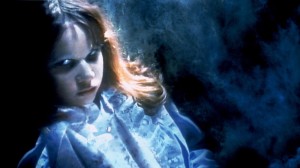
On the other hand, many of the old-school supernatural flicks were based on real literature 鈥�- Shirley Jackson, Edgar Allan Poe, H.P. Lovecraft, Richard Matheson and later Stephen King. These books were plumbed in the budding postwar culture of the early 1960s and were听done with a psychological depth and rendering not seen before. Think director 听and movies like 鈥�,鈥澨��,鈥� 鈥溾�� and 鈥�.鈥� Later, directors like Stanley Kubrick, Roman Polanski and Brian DePalma would flesh out the genre听with a long line of box office stars like Julie Christie, Gregory Peck, Jacqueline Bisset, Mia Farrow, Katherine Ross, John Cassavetes and Donald Sutherland. In 1973 alone, “鈥� 鈥�,鈥� 鈥溾�� and 鈥溾�� were released to terrified mainstream audiences.
鈥淚 didn鈥檛 use visual effects, we didn鈥檛 have anything like what you have today,鈥� 鈥淓xorcist鈥� director William Friedkin听草莓传媒’s Jason Fraley this week, not so much knocking the technology as pointing out the historical contrast. 鈥淭hey can do anything with computer-generated imagery today, and we did not have that, we did not have that in ’70s. Everything you see in those films we had to do.鈥�
Of course, “The Exorcist” is studied today for its innovative camerawork and special effects, but one could argue that its power relies on what you don鈥檛 see in the film, just as much as what you do.
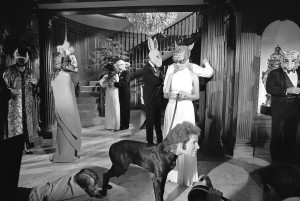
Take the accelerating听fear as Danny rides his Big Wheel through the carpeted halls of the sprawling hotel in Stanley Kubrick鈥檚 masterpiece 鈥�,鈥� or the strange villagers donning animal masks that flit in and out of the scenes in 鈥淭he Wicker Man.鈥� Something dreadful is going to happen, and we don鈥檛 known how or when, but it will be fun getting there.
Because what might be behind the hedgerow in an English garden on a sunny day could be more terrifying than the man in the ski mask flashing a bloody knife at night 鈥� if done right. Some believe the first hour of John Carpenter鈥檚 slasher masterpiece 鈥�,鈥� where Jamie Lee Curtis gets only small glimpses of killer Michael Myers among hanging laundry or in a car outside the school, is far scarier than the murder-by-numbers sequence in the last 30听minutes of the film.
Most often, it鈥檚 the feeling of uneasiness we remember, the shock after听an entire high school class is sent to a fiery grave by a scorned girl with supernatural powers in听鈥溾�澨齩r when pregnant Mia Farrow finds release in gobbling down bloody scraps of raw meat in 鈥�.鈥�
Some of this was certainly a reflection of the times 鈥� a period in the ’60s and ’70s听when the country was in turmoil over the Vietnam War and a younger generation sought听meaning in pop-psychology and spiritualism. Certainly the rise of revolutionary politics, communes, biker gangs, and the crimes of the Manson Family gave way to some of the more paranoid tropes in the movies of that era, rightly or wrongly, says Adam Lowenstein, associate professor of film studies at the University of Pittsburgh and author of
But if the supernatural era said something about yesterday, what do the splatter exploitation movies say about today? Lowenstein cautions against nostalgia, warning that we shouldn’t read too much into these movies, because horror, just like any other art form, is what the audience puts into it.
鈥淚 think the horror films of the ’60s and ’70s are quite rightly considered to be, at this point, the classics of the genre, and worth a lot of the adulation and worship they get, but I think it鈥檚 also important to remember that many of those films were as despised as the slasher-torture porn examples you are referring to in today鈥檚 cinema,鈥� Lowenstein听tells 草莓传媒.
For example, while George Romero鈥檚 鈥淣ight of the Living Dead鈥� is praised today as everything from a civil rights metaphor to a critique of the Vietnam War, it was by reviewers upon its 1968 release for its gore and 鈥渟ocial irresponsibility.鈥�
鈥淓verything we take for granted about it was not immediately resonate with people at the time,鈥� said Lowenstein. 鈥淚t took time for all that to be seen. We can鈥檛 always see films for what they are when they first come out. They need to percolate.”
鈥淚 do think the horror film has a much more profound and acclimated connection to society and politics than people give the genre credit for,鈥� Lowenstein adds. 鈥淏ut it is often hard to pin it down 鈥� it wouldn鈥檛 be art if that was the case.鈥�
As he points out, there is plenty of room in horror听for diversity. The supernatural strain is but one subgenre of its time. Long before,听there were monster movies, in fact an entire subgenre of “Dracula” was stretched out for decades, thanks in part to the听 era. Romero opened up the zombie front, which is still shuffling along quite strongly in 鈥淭he Walking Dead.鈥� In the 1950s, there were teenage drive-in flicks like 鈥�,鈥� and 鈥�,鈥� the descendants of which are in a million Syfy Channel creature features today.
And yes, the origins of the slasher also go way back, namely听films like Alfred Hitchcock鈥檚 鈥溾�� (1960), and Michael Powell鈥檚 鈥溾�� (1960). Not long after, the progenitors of the modern torture craze emerge in 鈥�” (1974), 鈥�” (1977) and 鈥�(1972) —听the latter two by a young Wes Craven.
“What I like about the horror genre is there is enough room for strange mutations and all kinds of horror and the sort of permutations and cross pollinations of all kinds,鈥� Lowenstein听tells 草莓传媒.
For every 鈥淓xorcist鈥� that film students seize upon for metaphors and pinnacles in moviemaking, he said there is much to be mined from the often maligned blood and gore films of today. 鈥�,鈥� for example, could say a lot about Americans鈥� post-9/11 fears, while 鈥淪aw鈥� may represent an entirely new narrative-construction of the video game aesthetic.
鈥淚f you look at it, it鈥檚 very close to the video game syntax,鈥� says Lowenstein, describing the plot about a maniacal man called 鈥淛igsaw鈥� who puts his victims through a series of 鈥渢ests鈥� involving psychological and physical torture. 鈥淰iewers feel the satisfaction of a gaming logic, they experience this on one level to another. We might be seeing something important, too, as cinema of course is taking a back seat in many ways to an industry (gaming) that is much more successful, economically. But that鈥檚 all conjecture, and it鈥檚 for us only to imagine at this point.鈥�
So while bygone eras are fun to ponder, he warns against funereal lamentations.
鈥淭here are always enough places you can dig in to find something else that鈥檚 happening,鈥� he said.
After all, when the industry was least expecting it, something like 鈥溾�� (1999) took the genre by storm, relying听almost entirely on the power of suggestion.
“(Horror) gives us things that are unexpected and new, and that鈥檚 just part of its DNA,鈥� Lowenstein says. 鈥淛ust when it seems one formula is dominating, that鈥檚 really not the case.鈥�


