
WASHINGTON —Ìý“Just think: We’re all having dinner with Smokey Robinson.”
That’s how emcee Jim Lauderdale summed up the annual “Grammys on the Hill” Wednesday night at Hamilton Live, an event thatÌýwas part concert,Ìýpart political rallyÌýtoÌýreformÌýmusicÌýlicensing.
This year’s headliner was theÌý, whoÌýfollowed previous honorees such asÌýDon Henley, Lady Antebellum and Alicia Keys, who was honored last year by first lady Michelle Obama.
“A great writer in Nashville a long time ago gave me some advice:Ìý‘You have to be as descriptive as possible with as few words as possible.’ …ÌýBeing influenced by Willie Nelson and Dolly Parton, the genius is in so few words. … That’s part of our journey as poets and songwriters. … And if [listeners] don’t feel something or see something, then it’s not a great song,” Brown toldÌý²ÝÝ®´«Ã½.
The Hamilton crowd got a sampling of those great songs, as Zac Brown Band closed out the show withÌýa mash-up of their megahit “Free” and a cover of Van Morrison’sÌý“Into the Mystic.”
“We’re excited to be an advocate for artists’ rights and producers and engineers,” Brown said. “The art and dedication it takes to make music on a really high level, those people have to be paid.”
“IfÌýcertain corporations’ lawyers are faster than the artists and the people representing us, there’s not going to be anything left. So it’s just important that it’s fair and that it’s not a greed-based system. If somebody doesn’t stand up for us, we’ll be victims of everyone else’s capitalization.”
That’s the point ofÌýa new bipartisan bill by congressmen Tom Rooney, R-Fla., and Joe Crowley, D-N.Y., who are partnering to sponsor the Allocation for Music Producers Act. Its goal is toÌýallowÌýmusic producers to collect royalties from the works they helped create.
“We have a long history in this country of protecting property rights for individuals who make something. … Just like an architect would be rewarded for a great building or a chef who makes a great dish, we need to ensure that those who help create a vision for a song are rewarded for it,”Ìýsaid Rooney,Ìýwho hasÌýseen Zac Brown live three times, including last year at Nationals Park.
The bill’s co-sponsor chimed in with a good-naturedÌýjoke.
“A guy like that who loves all that kind of musicÌýcan’t be a Republican,” Crowley said, before adding in all seriousness, “This is probably the most bipartisan event in Washington, D.C.”
Nearly 50 members of Congress, from Nancy Pelosi to Steny Hoyer, took the stage as Warren Haynes, formerly of The Allman Brothers Band, led a rendition of The Band’s “The Weight.”
ItÌýwas just one of many live performances on the night, including “The Star-Spangled Banner,” byÌýYolanda Adams; “The World I Know,” by Collective Soul’s Ed Roland; and “I’m a Song” by Jim Lauderdale, who was tapped to emcee after penning dozens of hit songs for George Strait, Gary Allan, Elvis Costello, Blake Shelton, the Dixie Chicks, Vince GillÌýand Patty Loveless.
Other artists showed up to lend their support, including Robert “Kool” Bell, of Kool and the Gang, Dee Snider, of Twisted Sister, andÌýEddie Money, who says the licensing debate doesn’tÌýeffect only current artists, but also artists who created hits years ago that have since become classics.
“I’m still trying to get paid for ‘Guitar Hero’ from 10 years ago! And ‘Grand Theft Auto,’ they haven’t paid me for that either! ‘Grand Theft Auto’ was ‘Two Tickets to Paradise,’ and ‘Guitar Hero’ had everything from ‘Shakin’ to ‘Take Me Home Tonight,'” Money toldÌý²ÝÝ®´«Ã½ with a lighthearted tone.
But beneath theÌýcasual, jokingÌýmanner, there was a subtle seriousness in Money’s quest.
“I realized that a lot of the writers and a lot of the producers don’t get what they deserve. There’s no doubt about it. There’s a lot of greedy hands in the pie, and a lot of these musicians are family people like myself. A lot of us have been in the business a long time, and we just want a fair shake. You produce somethingÌý… you sing on something, you wanna get paid for it,” Money said.
Of course, the biggest celebrity guest wasÌýMotown legendÌýSmokey Robinson.
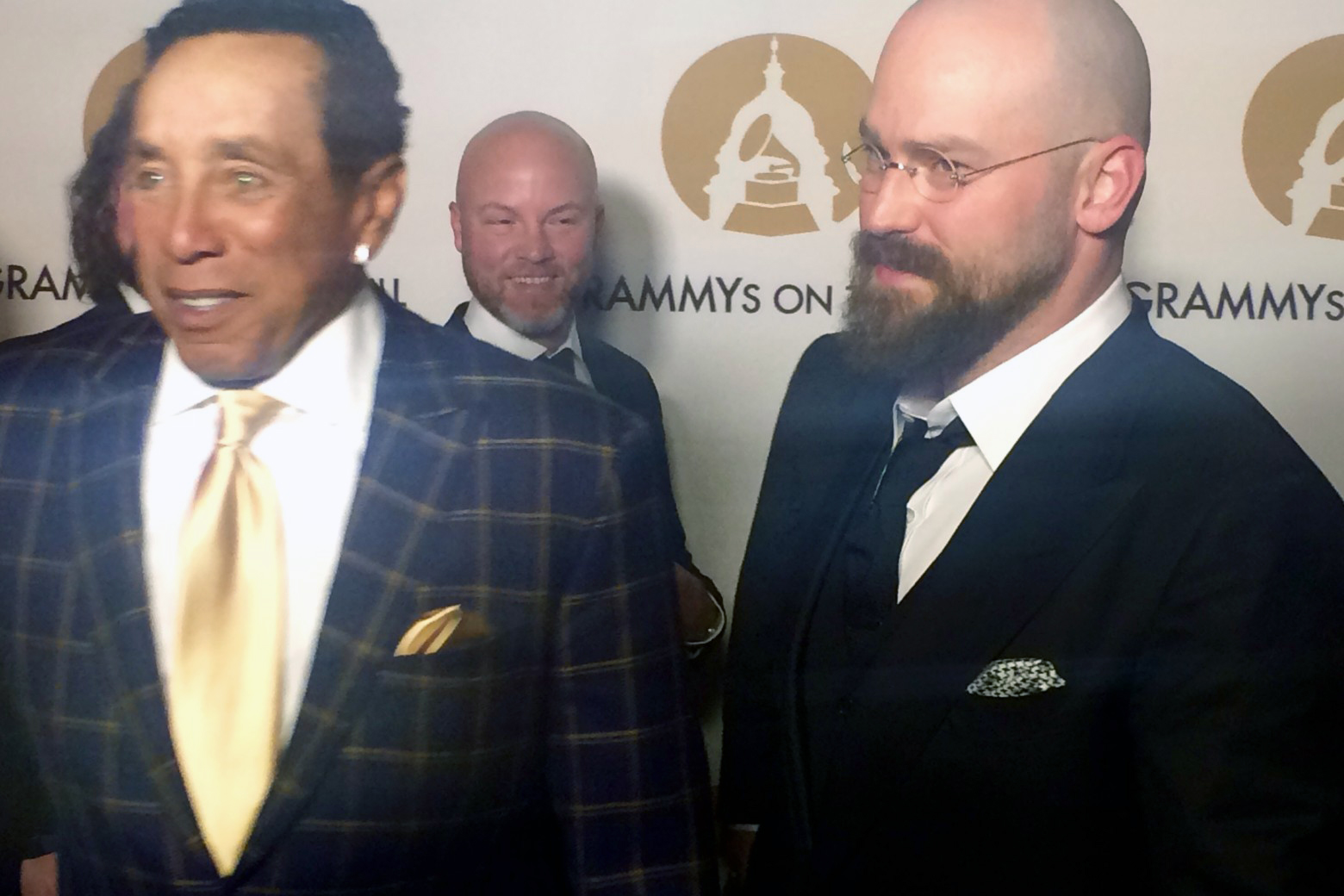
“I am so proud of (Zac Brown Band) for being the origin of this movement. … People who make the music should be compensated. … The writers and publishers have been paid all along, but not the artists, not the producers, not the engineers,” Robinson toldÌý²ÝÝ®´«Ã½.
HisÌývoice certainly bringsÌýclout to theÌýargument, seeing asÌýhe’sÌýone of Motown’s biggestÌýalumni.
“I’m very proud of the fact that I am a part of the legacy.ÌýMotown did something around the world that had never been accomplished before. All those artists in the same stable and making music and stuff — that had never been done before or since,” RobinsonÌýsaid.
So how did he come up with the smash hit “Tears of a Clown?”
“The music for that was given to me by Stevie Wonder. …ÌýSo when I heard, ‘Bum bum bum, ba da da da da da,’ that was a circus, so I wanted to write something about the circus but I wanted to personalize it. When I was a child, I heard a story aboutÌýPagliacci, who was an Italian clown who made everybody happy. All of the kids came to the circus to see him. … [But] when people went to his dressing room, he would cry because he didn’t have that kind of love from a woman,” Robinson said.
The clown taleÌýmirrors the plight of the musician, beloved by fans, but stymied by licensing laws.
Music producer Harvey Mason Jr. understands the hard work that goes on behind the scenes, having worked with Jennifer Hudson andÌýBeyoncé onÌý“Dreamgirls,” Dr. Dre on “Straight Outta Compton” and Anna Kendrick onÌý“Pitch Perfect 2.” He says the industry hasn’t kept up with technology.
“How music is regulated and paid for, is completely out of whack. The rules and regulations of how people are paid were established in the ’30s or ’40s and have not been updated since there is streaming music and since there is Vimeo and YouTube,” Mason told ²ÝÝ®´«Ã½.
He says advocacy events like “Grammys on the Hill”Ìýhelp break complacency amid changing times.
“We all come from every corner of the country, and we collide here in D.C. to talk about music issues and some of our concerns. Hopefully we’ll do a little political speak tonight, but most of it will be just fun and eating and drinking and great music.ÌýThen tomorrow, we’ll really start going hard and meeting with members of Congress,” he said.
Until then, enjoy the tunes and just think: We’re all having dinner with Smokey Robinson.


