
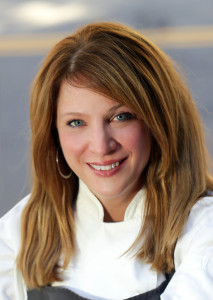
WASHINGTON 鈥� When Amy Brandwein started her culinary career in 2000 as a pastry intern at D.C.鈥檚 Galileo, she quickly realized her passion was not in pastry, but rather on the hotline. So she traded in her dough blade for a set of knives and started training as a cook.
Over the next five and a half years, Brandwein worked her way through every position in Galileo鈥檚 kitchen until she was named the Italian restaurant鈥檚 executive chef. Five and a half years may not seem like a long time to go from the bottom of the ladder to the top of the kitchen, but Brandwein said her ascent was 鈥渞eally difficult鈥� — and a lot of it had to do with her gender.
鈥淲hen I was making my way up through the kitchen, there weren鈥檛 as many examples of excellent, powerful female chefs out there,鈥� Brandwein says. 鈥淭he kitchen environment that I happened to be working in was very busy, very demanding, a very high-profile kitchen, and it was basically all male.鈥�
Brandwein鈥檚 experience is not unique. Historically, restaurant kitchens have been run by men. Despite the fact that women constitute the majority of the U.S. food service industry, few have leadership roles in the kitchen. In 2014, that it was less likely for a woman to be hired as a head chef than as a CEO.
However, there has been a rise in the number of women running restaurants in recent years. Boston-based chef Barbara Lynch brings in about from her collection of dining establishments, and New York鈥檚 April Bloomfield runs two Michelin star restaurants.
In nine years, three female chefs have won Bravo鈥檚 popular competitive cooking show 鈥淭op Chef.鈥�
The trend is not just national; D.C. is experiencing a similar feminist uprising in the kitchen. Brandwein, who is opening her first restaurant, , in June, says chefs such as and helped to pave the way for other women in Washington. Last year, 鈥檚 Marjorie Meek Bradley was selected by Food & Wine Magazine as one of 10 contenders for .
Since Brandwein was appointed executive chef at Galileo, she鈥檚 gone on to run several kitchens, the last of which was Alba Osteria. And over that stretch of 10 years, she鈥檚 picked up on a few reasons why women are underrepresented in the kitchen.
鈥淚 think there鈥檚 still this perception out there that the chef is a big guy with big knives and a big attitude, and that in order to be a chef you have to use brawn and really aggressive tactics to get food out of the kitchen. I think that that鈥檚 very intimidating for most people, for most women,鈥� Brandwein says.
鈥淚 happen to like boys clubs, I like to hang out with them, but do I want it to be an all-boys club? No.鈥�
She says the hours and the physical demands of working in a fast-paced environment may also contribute.
鈥淵ou have to be able to do the job that your counterparts are doing and that means lifting things that are 50, 60, 100 pounds. That means you have to be able to get through a service of seven hours on your feet with burns, cuts, the whole nine yards. You have to be able to do that and you need to be able to withstand that kind of pressure,鈥� she says.
Doron Petersan, the founding owner of in Northwest D.C., found it difficult to even find a job in the kitchen. She started working in restaurants when she was 15, but could only find positions in the front of the house, serving and hosting.
鈥淎s much as I wanted to, because I thought it was interesting, [working in the kitchen] was never even a real option because they just didn鈥檛 hire women,鈥� says Petersan, who opened Sticky Fingers in 2002.
Since she first started working in the industry, Petersan says she has 鈥渁bsolutely鈥� noticed a shift in leadership roles, but still sees more men heading up baking and cooking operations.
鈥淭he way we鈥檙e brought up in this culture is that men are taught to lead and women are taught to listen, and that is changing,鈥� she says. 鈥淲hether it鈥檚 culinary or whether it鈥檚 at a law firm, I think that鈥檚 the issue behind it, it鈥檚 just the way that our culture raises our men and our women.鈥�
In brewing and distilling, women call the shots
Women aren鈥檛 just settling into leadership roles in the kitchen: Other areas of the local food and beverage industry are seeing an increasing number of female leaders.
Emily Bruno, 33, is the director of business operations at Silver Spring’s . She is also one of the聽brewery’s four founders, three of whom聽are women.
Similar to the restaurant industry, men have long led聽the beer business. But in the last decade, women have gone from being a rare sight on the brewing floor to a regular presence,聽.
The country鈥檚 third largest brewery, New Belgium Brewing Company, was co-founded by Kim Jordan, who also serves as the company鈥檚 CEO. There鈥檚 even a network for professional female brewers, called the Pink Boots Society, which has close to 2,000 members.
But just because female brewers are more common, doesn鈥檛 mean women in the brewing industry don鈥檛 run into gender-related hurdles.
鈥淪ometimes you do face this very mundane sexism where somebody walks into a room and just talks to [Denizens鈥� fourth co-founder] Jeff [Ramirez], or comes in and wants to ask a question about where we lease kegs from. Even though I manage that relationship and that contract, they go to Jeff,鈥� Bruno says. 鈥淪o there is a little bit of camaraderie聽among the guys that we have to break down.鈥�
Bruno and Denizens co-founder Taylor Barnes both explain that in the past, women were used to market beer. But now, women are increasingly becoming the target audience for those marketing campaigns.
According to from the 2014 Great American Beer Festival, women aged 21 to 34 consume craft beer at a level above聽the national average, and represent 15 percent of total consumption. The increased interest in the industry聽likely contributes to the increasing population of female brewers.
Similar to running a kitchen, Bruno says the physical aspects of brewing likely kept the field traditionally male-dominated.
鈥淭here鈥檚 a physicality involved in brewing 鈥� you鈥檙e lifting a lot of weight,鈥� Bruno says.
About 60 percent of the employees in Denizens鈥� 400-seat taproom are women, and they are frequently required to change out the bar鈥檚 180-pound kegs.
鈥淥bviously there are a lot of really tough ladies who are doing it, but I think the physicality of it is one thing,鈥� Bruno says. 鈥淎nd historically, men just drank beer more 鈥� and so we鈥檙e trying to change that, and I think have done it really successfully.鈥�
Founder Taylor Barnes, 24, adds: 鈥淎 couple of proud moments for me have just been looking around the taproom and the beer garden and just seeing it be really mixed. 鈥� It鈥檚 really everyone across the spectrum that we want to include.鈥�
Another market that is bringing聽in more female drinkers and professionals聽is the spirits聽industry. D.C. residents Pia Carusone and Rachel Gardner recently announced their plans to become the District鈥檚 first female-owned distillery.
The two entrepreneurs plan to open their Ivy City operation, called , later this summer. And when they do open, they’ll be among the聽minority in their field.
鈥淚t鈥檚 a lot of moving heavy bags of grain, dealing with hazardous material; it鈥檚 just not an industry where you find a lot of women,鈥� Carusone says.
Recently, the two business partners traveled to聽Louisville, Kentucky, to learn more about making spirits and witnessed the gender divide, first hand.
鈥淲e鈥檇 frequently meet men who would say, 鈥極h nice to meet you.鈥� And they鈥檇 look around and say, 鈥榃ho are you guys working with?鈥欌�� Carusone recalls. 鈥淭hey would always sort of have this moment, like 鈥極h, it鈥檚 just you girls.鈥欌��
Despite the initial reactions, Carusone and Gardner say everyone in the industry has been supportive of their business.
鈥淏ut it鈥檚 like all men, in every aspect of this business,鈥� Carusone says.
Of course it can鈥檛 be overlooked that the increasing number of female chefs, brewers and distillers coincides with the growing number of women who are choosing to start their own businesses. According to , the number of women-owned firms has grown 68 percent since 2007.
鈥淵ou marry those two elements where women are involved more in the craft beer market and they鈥檙e involved more in business,鈥� says Denizens鈥� Bruno. 鈥淲omen can do it, there鈥檚 nothing innately male or female about any of this work.鈥�
Taylor Barnes of Denizens says that she appreciates聽when the business owners’ gender聽is merely an afterthought.
鈥淔our young, ambitious people are running a place for the community, and we happen to be women. That鈥檚 how I feel we鈥檝e been received and I appreciate that,鈥� she says.
Keeping the momentum going is key, says chef Amy Brandwein. And the best way to perpetuate the revolution of women in the food and beverage industries is to keep talking about the women who are succeeding.
鈥淚 think telling the stories of the women who are actually doing it is what gives rise to other women chefs the ability and confidence to keep going with their career because they see somebody who鈥檚 doing it.鈥�
Meet the women from Republic Restoratives in their video:


