
WASHINGTON 鈥� Shiny green apples, blemish-free beets and round red tomatoes paint the picture of most grocery store produce aisles. But there鈥檚 an ugly truth behind all of the pretty produce.
that up to 40 percent of fruits and vegetables go uneaten or get thrown away, mostly because they do not meet consumers’ cosmetic standards.
Two Georgetown students, however, hope to change that statistic.
In November, college seniors Phil Wong and Ann Yang launched . The company makes cold-pressed juices out of produce that would otherwise go to waste, due to aesthetics or surplus.
But its founders say MISFIT isn鈥檛 just a juice company.
鈥淚t鈥檚 not about the juice; it鈥檚 about the social mission,鈥� says Yang, a 21-year-old culture and politics major at Georgetown鈥檚 School of Foreign Service.
鈥淲e鈥檙e creating a culture around food waste and perceptions about what is ugly and what is beautiful.鈥�
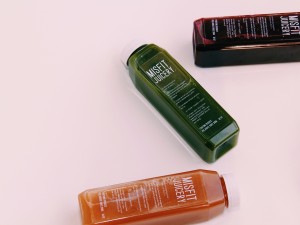
However, in order to sell their mission, they have to sell a product.
鈥淯ltimately, to keep everything running, people have to like the taste of the juice.鈥�
Wong and Yang currently offer four different juice varieties, including Kale and Stuff (kale, collard greens, apple, celery and lemon), Offbeet (beet, apple, carrot, lemon and ginger), Far From the Tree (apple, lemon and mint) and Greenhaus (broccoli, spinach, cucumber, apple and lemon).
Coming up with the different juice combinations required a lot of trial-and-error for the two students who had no prior experience in the food industry.
鈥淲e did a lot of taste-testing with our friends,鈥� Yang says. 鈥淲e try to figure out what鈥檚 in season and what will be at surplus, and build the recipes from the bottom up.鈥�
Since Wong and Yang started producing their juices out of the food incubator Mess Hall, demand for their product has practically tripled, Wong estimates.
MISFIT is currently in 14 different retail locations throughout the area, including Glen鈥檚 Garden Market, Union Market, a few farmers markets and a handful of stores on Georgetown鈥檚 campus.
鈥淚t鈥檚 an indication of how much we鈥檝e grown, that this question [of where to find the juice] has gotten hard to answer,鈥� says Wong, a 22-year-old science, technology and international affairs major.
Wong and Yang make anywhere from 600 to 700 bottles of juice each week from produce sourced from local CSAs and farmers. But when they graduate in two weeks, they plan to increase their production numbers and grow their business using a social-hiring model. They鈥檙e currently working with nonprofits to hire formerly incarcerated and formerly homeless persons.
鈥淩ight now we鈥檙e getting overwhelmed with, essentially, asking our friends to help us. With a couple of recent capital infusions, we鈥檙e going to start hiring people,鈥� Yang says.
Catching up on some much-needed sleep also may be in order.
鈥淩unning a business as a student has been a real blessing, but also certainly a curse because it鈥檚 difficult to balance everything,鈥� says Wong, who, in addition to working on MISFIT full time with Yang, is currently studying for finals.
So far, Wong and Yang don鈥檛 have an estimate for how much produce they鈥檝e 鈥渟aved,鈥� but it鈥檚 a metric they鈥檙e hoping to soon obtain.
Awareness around food waste and 鈥減roduce prejudice鈥� has grown tremendously 鈥� even since Wong and Yang began working on MISFIT last September. At first, consumers had misconceptions about the fruits and vegetables they were using in their juices.
鈥淎 lot of people thought we were using rotting or overripe fruit, which is not the case,鈥� Yang explains.
Some successful campaigns have likely contributed to the increased awareness.
In 2014, the French grocery retailer Intermarche launched a campaign to encourage its customers to buy ugly produce. To help customers understand that the disfigured produce tastes the same as 鈥減erfect鈥� produce, the company made and distributed soups and juices using the ugly produce, and it sold the ugly produce at a discounted price.
During the first two days of the campaign, each Intermarche store saw an increase in foot traffic by 24 percent and sold about 1.2 tons of food that would otherwise go to waste.
In March, New York-based chef Dan Barber turned his Greenwich Village restaurant, Blue Hill, into an incredibly successful pop-up, called . The pop-up鈥檚 menu featured dishes made from food traditionally thrown out in restaurant kitchens. Carrot tops, fish bones, kale ribs and pasta scraps were transformed from garbage to gourmet.
鈥淚t was a night of thoughtful, creative, entertaining and surprisingly tasty agitprop,鈥� about his experience at wastED.
WastED, was as much of a social success as it was a culinary one. Barber served more than 10,000 dishes using 600 pounds of ugly vegetables and 350 pounds of vegetable pulp.
In D.C., Wong and Yang are hoping to create a similar demand for forgotten food.
鈥淭he larger vision of Misfit is to formalize an economy for other fruits and vegetables,鈥� Yang says.
One way to do this is to pay a competitive price for the food farmers would otherwise just compost or throw away. Yang explains a lot of fruits and vegetables go unharvested or unsold due to financial barriers with distribution.
鈥淚t鈥檚 often cheaper for local producers to just compost or let it go to waste, because it鈥檚 so capital intensive to move it.鈥�
Paying a premium for that produce could encourage farmers to not ignore these products.
鈥淚f we can pay competitive prices, we can say, 鈥榃e value these vegetables just as much as your perfect apples and your perfect cucumbers,鈥欌�� Yang says. 鈥淲e can incentivize and create enough demand 鈥� where ugly fruits and vegetables are being sold in a more normal way.鈥�
Watch Intermarche’s campaign for ugly fruits and vegetables:


