
Holiday Plant Protection Points
- Poinsettia and Norfolk pine are topical plants that must stay indoors over the holidays. They can go outside with your other houseplants in the summer, but not now.
- Rosemary Christmas trees can be outside on all but the most frigid nights. They鈥檙e very cold hardy. But they are also sold badly rootbound and must be repotted into bigger containers if you want them to stay green.
- Trees selected by you and cut fresh at a local Christmas tree farm will stay supple and hold their needles the longest.
- All cut trees should have another inch or two cut off the bottom and sit in a big container of water for 24 hours to super hydrate them before being set up. And then be sure to keep their water holder filled. If it dries, you cries!
- Never chip away at the bark on a cut tree trunk to try and make a big tree fit in a small stand. If you remove the bark, the tree will not be able to take up water and will quickly turn brown.
- Dig the hole now (before the soil gets any more frozen) if you plan on getting a truly live (balled and burlaped) tree that you intend to plant outside after the holidays. Don鈥檛 keep such a tree indoors in a warm room for more than a few days or it will come out of dormancy and have a difficult time surviving afterward. And email me for advice on things such as the wrappings and planting depth before you actually plant it.
A Great Big Garden Gift for Around $2 a Pound
When Ben in Alexandria, Virginia recently wrote, 鈥淐an you recommend a plant database app? I’m not trying to ID plants using a picture; I just want to look them up by name.鈥�
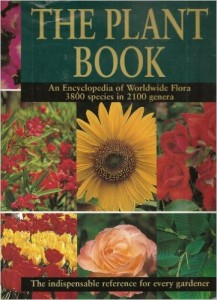
I had to admit that I don鈥檛 do apps. And then I realized that the old-school reference resource I do rely upon 鈥� a gigantic 8-pound hardcover called 鈥淭he Plant Book鈥� 鈥� would make a great gift for gardeners both real and armchair. And the screen won鈥檛 break if you drop it.
Published in 2001 by an international company called Mynah, it covers every plant family from Abelia to Zoysia, contains thousands of full-color photos that greatly assist with proper plant ID and has a very helpful index of plants by their common name, allowing you to figure out just which 鈥渕onkey plant鈥� your friend meant.
Inexpensive even when new (I think it retailed for around $30), the 1,000-page hardcover is now out of print, but a good number of used copies are available online for $10 to $20, including shipping. It鈥檚 a gift that any gardener would welcome. Just don鈥檛 try and put it in their stocking or you鈥檒l rip the mantle out of the wall.
A Garden Gift for Those Who Yearn to Farm Food Indoors
One of our most frequent email topics is 鈥渨hat kind of food plants can I possibly grow in an apartment?鈥� And many who have plenty of outdoor growing space dream of harvesting fresh eats when that outdoor world is frozen.
The answers, my friends, are not blowing in the wind 鈥� they鈥檙e in a great recent book called 鈥�,鈥� by Elizabeth Millard.
I had the pleasure of interviewing her on my public radio show a while back and was very impressed. She鈥檚 not just talking the talk: She has personally done everything detailed in the book, which is an easy and fun read as well as highly informative.
Published last June, the book really lives up to its subtitle, 鈥淗ow to Turn Your Home Into a Year-Round Vegetable Garden,鈥� and the book covers everything from easy-growers such as microgreens and herbs up to big plants such as peppers and even tomatoes. A great gift for the gardener on your list 鈥� whether they live in one room or on one acre.
Compost Advice and Two Gift Ideas
Arlene in Silver Spring, Maryland 聽writes, 鈥淚 have filled my two outdoor black plastic composters with shredded leaves and coffee grounds. I also have a nice amount of finished vermicompost in my basement, worm bin. Would it be a good idea to add the worm compost to my outdoor compost bins?聽Or should I put it on my garden now?鈥�
Well, sometimes you have no choice with finished outdoor compost at this time of year, Arlene. You pretty much have to put it on your garden to make room for this year鈥檚 shredded leaves and other new raw material. But such compost will lose some of its nutrients over the winter, which makes your answer easy 鈥� into the outdoor bins should go the work of your worms.
There, it will not only be better preserved, but also provide an additional benefit: Adding some finished compost of any kind to newly built piles and bins 鈥渏ump start鈥� the process and helps those new raw materials turn into finished compost much faster. So mix that great material from your worm bin in with your shredded leaves.
And while we鈥檙e on this topic, a reminder to the garden gift searchers out there:
- Attractive outdoor composters made of black recycled plastic (like this 鈥溾��) look very nice in even the most upscale yard while they turn shredded fall leaves and kitchen waste into garden gold.
- Space-saving use hardworking (and well-behaved) red wrigglers (鈥淭he Cadillac of worms鈥�) to turn kitchen waste such as apple cores and lettuce leaves into a finer plant food than mere money can buy.
It鈥檚 Too Cold to Be Harassing Hostas
Joy in Mount Airy, Maryland must have gotten all her shopping done already, because it sounds like she has time on her hands. She writes, 鈥淚s it too late to dig, divide, and transplant hostas? I haven’t had a chance to until now.鈥�
Well, Joy鈥檚 question sent me outside to my shade garden to look at the state of my hostas, and their greenery has faded to the point where I can鈥檛 see where most of them are (or were) anymore. If she thinks she can find hers with certainty, she can go ahead and dig them up, cut them apart and replant them now 鈥� it won鈥檛 hurt the plants one bit.
But I鈥檇 rather spend my excess energy on more seasonal chores such as pruning some holly and evergreen branches for holiday decorations. Or for really important stuff, such as getting the last of the fall leaves off of where my spring bulbs are planted. If I don鈥檛, those whole leaves will mat down and make it very hard for the new green growth of the bulbs to emerge 鈥� especially for the tiny, super-early bloomers such as Glory of Snow, which can appear as early as New Year鈥檚.
I鈥檇 leave big honkin鈥� herbaceous perennials like hostas alone until after they begin to emerge in the spring, when their location will be certain and the weather will likely be much nicer for that kind of work.


