


WASHINGTON 鈥� Thirty-seven years ago, D.C. native Patrick O鈥機onnell was searching for an affordable space where he and his partner, Reinhardt Lynch, could open a restaurant in Virginia鈥檚 Shenandoah countryside.
When an auto repair shop in the tiny town of Little Washington became available, O鈥機onnell and Lynch took a leap of faith. They rented the former garage for $200 a month and converted the front half of the building鈥檚 downstairs space into a dining room, which they named .
Within weeks of opening, The Inn was proclaimed the best restaurant within a 150-mile radius of D.C. By the end of the first year, O鈥機onnell and Lynch bought the building and started building what would one day be considered one of the best restaurants in the country.
And it all started with a plane ticket.
鈥淚 often say the most intelligent thing we ever did, was at the end of the first year 鈥� we took all of our pennies and went on a gastronomic pilgrimage to the greatest restaurants of the world,鈥� O鈥機onnell says.
The primary purpose of the pilgrimage was to sample dishes from the world鈥檚 most renowned kitchens 鈥� many of which were scattered throughout small villages in France.
鈥淥ften times, dinner at one of these legendary restaurants cost more than the car we were driving, but we considered the process to be a form of higher education,鈥� O鈥機onnell writes in his new book, 鈥�.鈥�
O鈥機onnell was inspired by ingredients, and found the aesthetics of the rural restaurants moved him as well.
鈥淎t the time there was not anything, really, in America to look to as a role model or a source of inspiration. [We] did not have a culture of leaving an urban setting and expecting to find a great meal.鈥�
Each January, O鈥機onnell and Lynch embarked on another journey in search of the world鈥檚 best food. Each time, they measured the progress of The Inn against Michelin-starred restaurants.
鈥淎nd then little by little by little, the gap began to narrow,鈥� O鈥機onnell says. In fact, it was only a matter of years until chefs from those world-renowned restaurants began sending their students to The Inn at Little Washington to learn from O鈥機onnell.
鈥淚t was as if this amazing circle closed, and simultaneously, America went into overdrive in terms of its culinary consciousness,鈥� O鈥機onnell says.
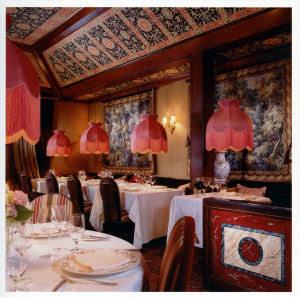
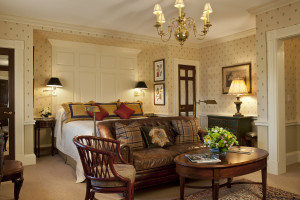
The cuisine was not the only thing improving at The Inn at Little Washington 鈥� the physical space was being refined as well. O鈥機onnell hired architect Albert Hinckley to help reconstruct the 1895 barn-like building, and he teamed up with London-based designer Joyce Conwy Evans to bring the interior to life with whimsical colors, patterns, textures and furniture.
鈥淭he food is, of course, expected to be perfection, but we have to reach people on all levels,鈥� O鈥機onnell says. 鈥淸Evans] has a kind of magical, fantastical view of the world.鈥�
Today, The Inn at Little Washington is more like a campus consisting of 20 different properties, including cottages, a 6,000聽square-foot home, shops, gardens and a farm filled with llamas, sheep, chickens and more.
Guests can spot聽painted monkeys playing musical instruments on the walls of The Inn鈥檚 鈥淢onkey Lounge.鈥� In the dining room, an anatomically correct cow trolley 鈥� also known as Faira, the cheese cart 鈥� is pushed past diners.
O鈥機onnell, Hinckley and Evans all worked collaboratively on transforming the formerly bat-infested second floor 鈥� once a basketball court 鈥� into overnight guest rooms named after the world鈥檚 best chefs.
O鈥機onnell says one motivation for writing 鈥淎 Magnificent Obsession鈥� is that these sights often go unseen by visitors who only come to get a taste of the restaurant.
鈥淚t鈥檚 a surprise even for people who have stayed with us, because each space, each room, each dimension is totally different and carefully thought out over many years and has a story to tell,鈥� he says.
At any given time, O鈥機onnell says he and Evans have two or three projects going on 鈥� 鈥渁nd four more on the drawing board.鈥�
He adds, 鈥淚t鈥檚 unusual for America to have something that continues to evolve and change and grow as a sort of working art work. That鈥檚 what the place has become. It鈥檚 never static; it continually is being enhanced by all of the people who come into it.鈥�
When asked about his favorite project over the 37 years, O鈥機onnell doesn鈥檛 hesitate a second: It鈥檚 the kitchen. It鈥檚 where the self-taught chef and owner spends most of his time.
The kitchen, dreamed up by both O鈥機onnell and Evans, is inspired by the one at Windsor Castle.
鈥淓veryone said we were crazy to spend that much money on a space that no one would see 鈥� no one would appreciate it,鈥� O鈥機onnell says.
In the preliminary stages of the redesign, O鈥機onnell met with kitchen designers pushing what he calls 鈥渧ery elegant laboratory, kind of spaceship spaces.鈥� The look was too modern to fit in with the 19th century European-style inn.
鈥淚t would feel a little bit jarring to walk from one to the other,鈥� he says. 鈥淚t was essential that the kitchen feel also like one from a great private house of another era.鈥�
The kitchen鈥檚 focus is a brass-and-copper hood suspended above a bottle-green-and-brass island range. There is also a fireplace, a beamed ceiling and hand-painted blue-and-white tiles.
鈥淲hen guests see it, they鈥檙e astonished. It鈥檚 its own ultimate fantasy world,鈥� O鈥機onnell says.
Along with a more traditional design, O鈥機onnell also wanted to maintain a level of spirituality in the kitchen. He says there has long been a tie between chefs and monks; in the Dark Ages, chefs took refuge in monasteries. In his kitchen, O鈥機onnell has Gregorian chants playing in the background.
The transformation of The Inn at Little Washington has taken decades, and throughout its evolution the has won multiple awards 鈥� both for its cuisine and its accommodations.
O鈥機onnell says the years invested were necessary; he never intended to rush the property鈥檚 progression.
鈥淚 always say if you listen closely enough to your ingredients, they will tell you what they want to be. I feel the same applies to an interior space, or particularly to an old house. You don鈥檛 ever wish to impose yourself on it; you want to stand back and look at it as it is and imagine how it would like to be transformed 鈥� what it would be in its ultimate potential,鈥� he says.
O鈥機onnell likens The Inn to his own personal聽鈥渓andscape portrait” — one he’s not ready to stop painting.
鈥淚 think in any art work, and I regard [The Inn] as one, it has to reflect the artists鈥� state of mind at the moment. So it really can鈥檛 be static; if you take your energy out of it, it will die,鈥� he says.
鈥淚t began as a restaurant in a rented room of a garage, but it has continued to evolve 鈥� and will continue to evolve.鈥�


