
WASHINGTON 鈥� A year and three months ago, Debra Stotland Bowden and her husband Anthony Bowden spent their days in a city park and their nights on the marble steps of a local church.
Like in D.C., they were homeless. But that changed one summer afternoon when a van from D.C.鈥檚 Department of Human Services approached the couple.
鈥淭he man drove up and hopped out and asked, 鈥楧oes anybody need a place?鈥欌�� Debra recalls.
The answer seemed obvious.
Since living on the streets, Debra, who is in her 60s, had suffered two strokes. 鈥淚 was ready to get off the streets,鈥� she says.
But she had some initial hesitations.
鈥淢ost people figure there has to be a catch. They鈥檙e going to want me to do something, and I鈥檓 grown and I鈥檓 just not going to do it. The 鈥榶ou can鈥檛 tell me what to do鈥� attitude 鈥� you know what I mean?鈥�
She got in the van anyway, to see what was being offered. Shortly after that ride, she and her husband of nine years had a place to call home.
—
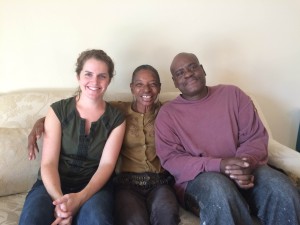
In a quiet brick building in Southeast, D.C., Debra sits on her cream-colored couch, overlooking her outdoor patio. Her apartment walls are decorated with pictures; her kitchen counters, with appliances.
Anthony works in the area, and Debra says she plans to get a part-time job as soon as she fully recovers from her stroke. 鈥淭hat鈥檚 my next step,鈥� she says.
Debra and Anthony are two of 95 formerly homeless Washingtonians that have been placed in housing in the past year through the聽聽at聽Miriam鈥檚 Kitchen.
The program matches homeless clients with available housing units throughout the city and provides services, such as case management, to help keep them there.
鈥淪omeone who visits residents on a regular basis to make sure things are going OK and addressing any needs,鈥� says Kierstin Quinsland, director of housing at .
Anthony, who has been homeless for a number of years, says the support from the program has helped him adjust to his new life.
鈥淭he transition from being homeless to being not homeless is a challenge by itself,鈥� he says.
Miriam鈥檚 Kitchen is one of several service providers in the city that helps to place homeless individuals in permanent supportive housing. In the program, which is administered through a contract with the D.C. Department of Human Services, residents pay 30 percent of their income for rent and the rest is subsidized. The supportive services are provided free to the resident.
Miriam鈥檚 Kitchen reports a 92 percent success rate with the program, and show that providing the homeless with a place to live is more cost effective than allowing them to remain homeless.
鈥淪ome of these folks who are coming in to our program, and not all, but a lot, have high instances of emergency use or police interactions,鈥� Quinsland says.
鈥淕oing in and out of the emergency room is very expensive for the community, and so putting somebody in an apartment 鈥� having them sleep inside, having somebody to help manage some of those issues where their health is not exacerbated and they鈥檙e not going to the emergency room all the time 鈥� is a lot cheaper.鈥�
The city is recognizing the success of the program. Quinsland says new money is coming out to fund an additional 360 permanent supportive housing units. Now, the biggest need is finding landlords with available housing.
—
Max Finland has managed properties in the D.C. area for the past two years, and in that time, he has converted nearly all of his 350 units over to permanent supportive housing.
Finland says there are a lot of benefits for landlords who participate in the program. Because the service provider and case manager are in constant communication with the tenant, he鈥檚 always aware of any maintenance issues or causes for concern.
The case manager helps residents address mental health needs and substance abuse issues 鈥渂efore it becomes an issue for eviction,鈥� Quinsland explains. Plus, Finland says, each month, he鈥檚 guaranteed a rent check through the voucher-based program.
鈥淭he other part is, you don鈥檛 have to chase money. I hate chasing money,鈥� he says.
He admits there is an escalated burden of inspection, since the program is run through the city, and quite a bit of paperwork, but he says it鈥檚 all worth it.
鈥淎t the end of the day, it feels really good.鈥� And having 鈥済reat tenants,鈥� like Debra and Anthony, always helps.
鈥淭heir apartment looks better now than it did when they first walked in. And we couldn鈥檛 ask for anything more than that,鈥� Finland says.
In addition to finding more landlords, Anthony says another hurdle is convincing some members of the homeless community to participate in the permanent supportive housing program.
鈥淲hen you become used to something that is so easy, it鈥檚 hard for change,鈥� he says. 鈥淲hen you get complacent, year after year with the steps, the park, the park, the steps 鈥� People get really pacified with that, and they don鈥檛 want the change.鈥�
He knows firsthand, because he felt that way too. But he says he and Debra are glad they took a leap of faith, and they hope more landlords give other members of the homeless community the opportunity to feel the same way.
鈥淔inding housing is the biggest challenge for us,鈥� Quinsland says. 鈥淒.C. is a very expensive place to live, and we鈥檙e always looking for more landlords who want to participate.鈥�


