
WASHINGTON 鈥� Wimbledon began this week, a fortnight of tennis at its most hallowed grounds. There have been many memorable championship moments over the years, including some of the . But five years ago, two men whose encounter would have lived and died in relative obscurity turned their meeting into something classic, something momentous, something otherworldly that transcended the very nature of sport into something deeper.
Related Gallery

The day prior, June 22, 2010, a freakishly tall, lanky American named John Isner squared off with a French grass court specialist named Nicolas Mahut in a first-round match. The two split the first two sets, with Mahut winning the third in a tiebreak, then Isner returning the favor in the fourth. It was already a hard-fought, competitive affair before the fifth and final set, which would become something else entirely.
For those unfamiliar with the specifics of grand slam tennis scoring, in the fifth set, there is no simple, first-to-seven-points-and-win-by-two tiebreaking system. A player must win the set by two full games. That means the match continues until one player achieves such an advantage, no matter how long that takes.
Isner-Mahut had been suspended after the fourth set on Tuesday after nearly three hours of play, as the light had faded after 9 p.m. Play resumed just after 2 p.m. Wednesday, with a full seven hours of daylight to complete the fifth set. Little did the spectators settling into Court 18 know as they did so that would not be enough to settle this match.
***
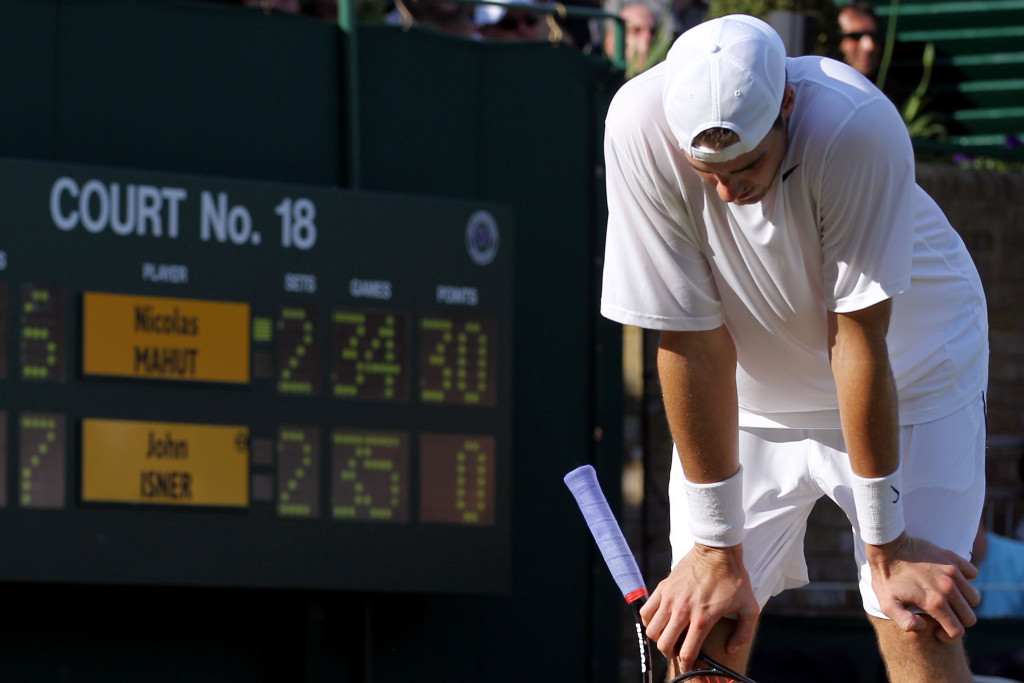
One of those spectators was Xan Brooks, an editor at The Guardian normally assigned to film stories, but who asked editors in the lull after the Cannes Film Festival that year to contribute to coverage on the paper鈥檚 live blog. His day had been spent opining on the dismal state of British tennis (at the time) and musing about England鈥檚 World Cup game that day, which was undisputedly more important to the British general public than whatever was happening at Wimbledon.
鈥淔ootball always overshadows tennis,鈥� said Brooks in a conversation recalling his coverage five years ago. 鈥淭ennis is the absolute impoverished cousin in England.鈥�
But once the World Cup game had finished and Isner and Mahut鈥檚 fifth set broke into double figures, overshadowing the other action, Brooks suddenly found himself a part of something far more than he had bargained for.
鈥淚t becomes a curiosity at first, but once you realize there鈥檚 no sense of the deadlock being broken, it becomes positively surreal,鈥� he recalled. 鈥淭his is kind of all there is, even though Federer is playing at the same time, even though Djokovic is playing at the same time.鈥�
If you haven鈥檛 , carve some time out of your day to do that (the action really picks up at the 3:45 p.m. entry). While his descriptions delve into the comically absurd, they seem to capture the inane essence of the afternoon/evening as it unfolds.
Brooks found a spot, a rooftop terrace restricted only to press, that gave him a clean view of the action from above. By the time the fifth set reached 15-all, the crowds had begun to gather around Court 18, and he settled in and tried to inject some comedy into the proceedings, figuring they could only go on so much further.
“On and on they go. Soon they will sprout beards and their hair will grow down their backs, and their tennis whites will yellow and then rot off their bodies. And still they will stand out there on Court 18, belting aces and listening as the umpire calls the score. Finally, I suppose, one of them will die.
Ooh, I can see the football out of the corner of my eye. England still 1-0 up!”
Only, they聽kept going.
***
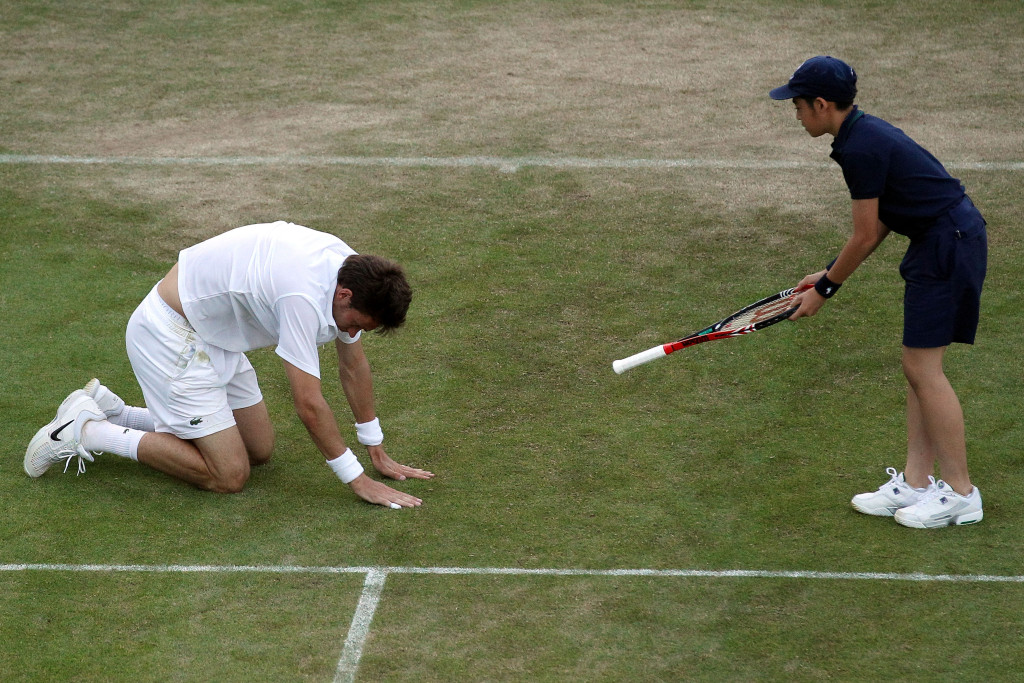
Isner was on serve to begin the set, a crucial notation in this story. For neither man was able to break the other鈥檚 serve. The terminology 鈥� to break 鈥� was more poignant at that point than any other in the sport鈥檚 history. Isner and Mahut each refused to break or be broken, trading games back and forth, seemingly into infinity.
鈥淚t鈥檚 hard to overstate the oddness of the atmosphere on Court 18,鈥� Brooks recalled. 鈥淚t鈥檚 was like a very ornately structured piece of slapstick performance art, with two men bound by a length of rope. Each game got them more entangled in the rope and brought them closer and closer together. They both seemed oddly mortified to find themselves in this kind of spectacle.鈥�
The World Cup match ended, but on and on toiled Isner and Mahut, to 24-all. Brooks鈥� initial jokes about the players becoming zombies morphed into a tale of the undead eating spectators鈥� limbs as the players and those watching devolve into psychosis. 30-all. 40-all. 50-all.
At 59-all, the Earth鈥檚 rotation no longer accommodated the madness. It had gone dark, and , sending the match into a third day. With that ended Brooks鈥� coverage, but not his thoughts of the match, and a creeping fear, one which grew overnight: what if one of them actually died?
鈥淏oth men had clearly pushed beyond endurance levels, really kind of gone deep into the unknown,鈥� he said. 鈥淚 did sort of wake up in the morning with the trepidation that one of them had died.鈥�
***
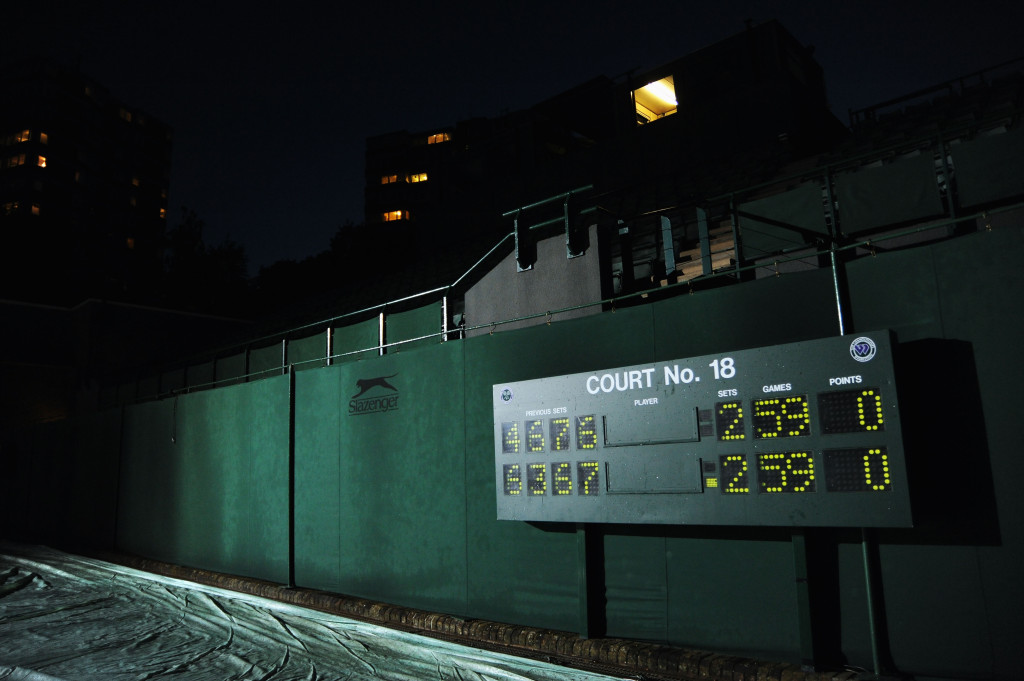
Whether alive or simply undead, both men returned to the court Thursday, to international fanfare and attention. And somehow, they played more than another full set鈥檚 worth of tennis.
The final game seemed the ultimate battle of attrition; Isner鈥檚 forehand volley going just wide on the first point, Mahut鈥檚 deep return leaking over the back line on the second, the Frenchman鈥檚 drop shot catching the net after Isner had slipped on the third. But then Mahut put away a charging, cross-court winner to pull level at 30-30, only to watch Isner power a forehand past him down the line to set up a fifth match point. Finally, stranding himself at the net, Mahut聽allowed Isner to wind up and crack a backhand past him, bringing the merciful end.
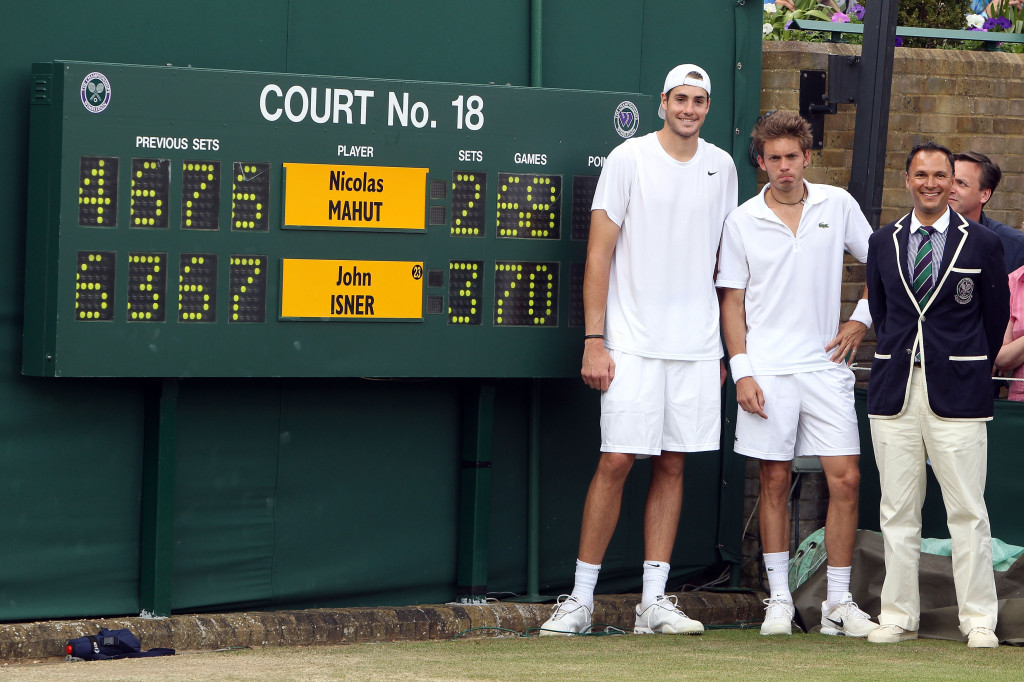
Isner in jubilatory relief. Mahut stood in dejected disbelief at the net, awaiting a handshake that turned into a hug, then . But there was no escape. The match had become historic, and needed to be preserved for posterity. An official dragged the two over along with the umpire for a photo next to the scoreboard.
鈥淲hat they both wanted to do was just get the hell off this court that was purgatory for them,鈥� said Brooks. 鈥淢ahut just looks desperate. He looks like one of those soldiers they鈥檝e found in the jungles outside of Japan that has been fighting the second World War for 60 years.鈥�
The . 6-4 3-6 6-7 7-6 70-68.
70-68. The final set was 138 games long, longer than any other full match in the history of the game.
At 11 hours and 5 minutes, Isner-Mahut wasn鈥檛 simply the longest match ever, it was the longest by more than four-and-a-half hours, obliterating the record set six years prior at the French Open. It , which was . It broke the official Wimbledon website, which was only structured to go as high as 50 before it restarted at zero. It broke the bounds of what anyone believed to be possible.
Somehow, in all that back-and-forth, Isner managed just five match points. That鈥檚 how perfectly level the match was. And yet, to be absorbed in competition at that high of a level for so long, the range of emotions must have been overwhelming.
鈥淲hat happens to the relationship between those players as time goes on?鈥� posited Brooks. 鈥淭hey must go through every shade of relationship as time goes on 鈥� love, respect, hate, everything. In a way, they must weirdly feel closer to the other than any other person in the world.鈥�
***
In a near statistical impossibility in the math of the random draw, the two met again in the first round at Wimbledon the very next year. It鈥檚 as if fate had inexorably tied the two together in cosmic twine.
Mercifully, this year the two have drawn opposite ends of the bracket, meaning they could not possibly meet until the final, something out of range of either鈥檚 wildest fantasies.
When before this year鈥檚 Wimbledon what his best match ever was, there was only one answer for Mahut.
鈥淎gainst Isner at Wimbledon in 2010,鈥� he said. 鈥淚 had so many feeling during this match.鈥�
As for his worst?
鈥淚t could be that one, too.鈥�
Mahut could have vanished into oblivion, but instead he has forged an admirable career for himself at the age many are fading into obscurity. Entering Wimbledon in 2010, he was a 28-year-old ranked 148th in the world, needing to win his way in through qualifying. Since then, he has won three titles, risen as high as 37th in the world, and was named to France鈥檚 Davis Cup team, where he earned a straight set doubles win earlier this year.
And he doesn鈥檛 hold any resentment toward Isner, that both players 鈥渟hould get a Wimbledon wild-card for life if we need it,鈥� thanks to their 2010 legacy. In fact, Mahut would love the chance to play alongside the man he made history with.
鈥淚 wish I will end my career by playing doubles with John at Wimbledon,鈥� he said.
Why not? Crazier things have happened.


